
,%20a%20bitter%20or%20sweet%20liqueur,%20and%20a%20splash%20of%20soda%20water.%20Served%20over%20ice%20in%20a%20large%20w...)
What Is a Spritz? The Complete Guide to Spritz Cocktails
What is a Spritz

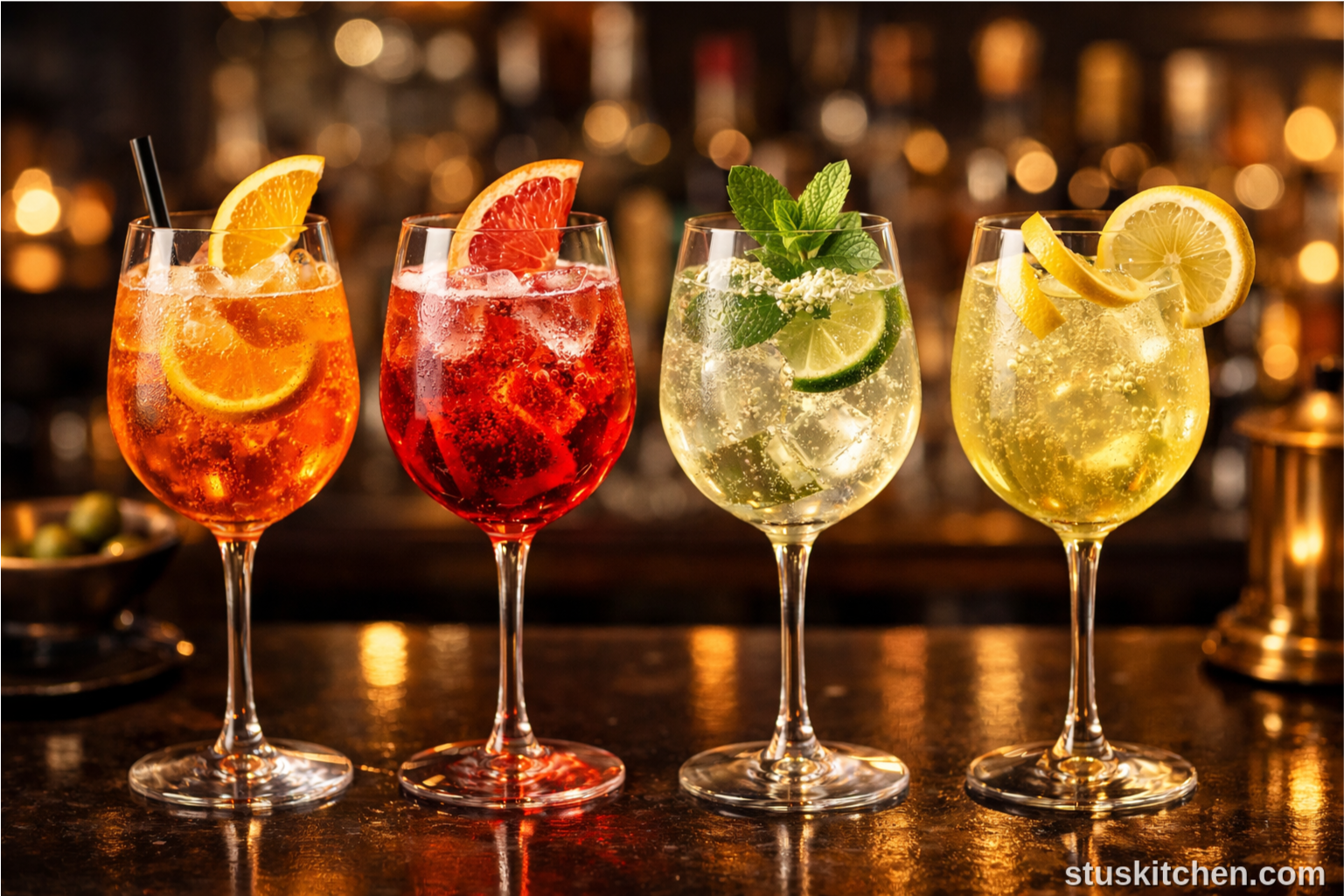
A spritz is an Italian cocktail made with three ingredients: sparkling wine (usually Prosecco), a bitter or sweet liqueur, and a splash of soda water. Served over ice in a large wine glass, it is the official drink of aperitivo hour, that golden window between work and dinner where Italians gather to sip something light, eat small bites, and ease into the evening.
The standard formula is the 3-2-1 ratio: three parts Prosecco, two parts liqueur, one part soda water. Change the liqueur and you change the spritz. Aperol gives you the famous orange one. Campari makes it bolder and more bitter. Elderflower turns it floral. Limoncello makes it bright and citrusy. The format stays the same. The possibilities keep going.
That flexibility is what makes the spritz one of the most popular cocktail categories in the world right now. It is low in alcohol, simple to make, endlessly customizable, and looks beautiful in a glass. If you have hosted any kind of gathering in the past few years, chances are someone asked for a spritz.
A Brief History of the Spritz
The spritz started as a practical solution, not a cocktail trend. In the 1800s, portions of northern Italy's Veneto region were under Austro-Hungarian control. Soldiers and visitors from the empire found Italian wines too strong for their tastes, so they began adding a splash of water to dilute them. The German word for splash is "spritzen," and the name stuck.
Over the next century, the drink evolved. Still water became sparkling water. Wine became Prosecco. And in the early 1900s, Italian aperitif liqueurs entered the mix. Aperol launched in Padua in 1919. Select debuted in Venice in 1920. Bartenders started combining these new bitters with the spritz format, and the modern Italian spritz was born.
The version we know today, with the 3-2-1 ratio of Prosecco, aperitif, and soda, solidified in the 1970s. But it stayed mostly regional until the 2000s, when a massive marketing push from Aperol turned the spritz into a global phenomenon. Now every major city has bars where the Aperol Spritz is the best-selling drink on the menu.
The 3-2-1 Spritz Formula
Almost every spritz follows the same basic structure:
3 parts sparkling wine. Prosecco is traditional, but Cava, Crémant, or even dry sparkling rosé work well. You want something dry and bubbly. Sweet sparkling wine makes the drink cloying.
2 parts liqueur or aperitif. This is where the flavor comes from. Bitter aperitifs like Campari and Aperol are the classics, but elderflower liqueur, limoncello, amaro, and even tonic syrups all work in this format.
1 part soda water. Club soda, sparkling mineral water, or tonic water. This lightens the drink and adds extra effervescence. Some people skip the soda entirely for a more concentrated flavor. Others double it for a longer, lighter drink.
Ice + garnish. Fill a large wine glass with ice before building the drink. Garnish with a citrus slice (orange for bitter spritzes, lemon for lighter ones), an olive, or fresh herbs like mint or rosemary.
That is the whole recipe. No shaker, no strainer, no bartending skill required. Pour, stir gently, garnish, drink.
Every Type of Spritz Worth Knowing
The spritz is not one cocktail. It is a format. Here are the major variations, ranked roughly by popularity.
Aperol Spritz

The one that started the global craze. Aperol is a sweet, orange-hued aperitif with notes of vanilla, bitter orange, and rhubarb. At only 11% ABV, it makes the lightest of the classic spritzes. The flavor is approachable, a little sweet, a little bitter, and incredibly easy to drink. This is the gateway spritz for most people, and there is nothing wrong with that.
Flavor profile: Sweet, citrusy, lightly bitter Best for: First-time spritz drinkers, warm weather, large gatherings
Hugo Spritz

The Hugo Spritz was created in 2005 by a bartender in South Tyrol, Italy, and it has been trending ever since. Made with St. Germain elderflower liqueur, Prosecco, soda water, and fresh mint, it is the most floral and aromatic spritz in the family. It tastes like a summer garden in a glass.
Flavor profile: Floral, herbal, refreshing, lightly sweet Best for: People who do not like bitter drinks, brunch, spring and summer gatherings
Campari Spritz
Campari is Aperol's older, bolder sibling. At 24% ABV with a drier, more herbal bitterness, the Campari Spritz is the drink for people who have graduated past Aperol. The ruby-red color and complex flavor (grapefruit peel, cinnamon, cascarilla bark) make it a more sophisticated sipping experience. Italians in Milan have been drinking this version since long before Aperol went global.
Flavor profile: Bitter, herbal, complex, dry Best for: Negroni lovers, people who find Aperol too sweet
Limoncello Spritz

The Limoncello Spritz is summer in the Amalfi Coast, distilled into a cocktail. Limoncello brings intense lemon flavor with a sugary sweetness that Prosecco and soda water balance out. It is one of the simplest spritzes to love. If you enjoy lemonade, you will enjoy this.
Flavor profile: Bright, lemony, sweet, sunny Best for: Lemon lovers, summer parties, outdoor dining
St. Germain Spritz
St. Germain is an elderflower liqueur that became a bartender obsession in the 2010s. Its spritz version is similar to the Hugo but without the mint, creating a cleaner, more refined floral drink. The brand suggests an equal-parts recipe (Prosecco, St. Germain, and soda in equal measures) rather than the 3-2-1 ratio, which makes for a lighter, more delicate cocktail.
Flavor profile: Elegant, floral, balanced, understated Best for: Wine drinkers transitioning to cocktails, elegant gatherings
Lillet Spritz
Lillet Blanc is a French aperitif wine with honey, citrus, and floral notes. In spritz form, it creates one of the most delicate and nuanced drinks in the category. Lillet Rosé works too, adding a hint of berry alongside the citrus. This is the spritz for people who find most cocktails too heavy-handed.
Flavor profile: Delicate, honeyed, citrusy, subtle Best for: Wine lovers, light appetizer pairings, afternoon sipping
Cynar Spritz
Cynar is an Italian amaro made with artichoke and other herbs. Yes, artichoke. In spritz form, it creates something earthy and herbal with a pleasant bitterness that is softer than Campari but more interesting than Aperol. It is a conversation-starter drink. People who try it for the first time always want to talk about it.
Flavor profile: Earthy, herbal, mildly bitter, savory Best for: Adventurous drinkers, food pairing, dinner aperitifs
Cappelletti Spritz
Cappelletti is a wine-based Italian aperitivo with a gentler bitterness than Campari and a deeper, more complex flavor than Aperol. It sits right in the middle, making the Cappelletti Spritz a Goldilocks choice for people who want some bitterness without the full Campari intensity. The deep reddish-orange color is beautiful.
Flavor profile: Bittersweet, fruity, medium complexity Best for: People who find Aperol too sweet and Campari too bitter
Amaro Spritz
Any quality amaro can become a spritz. Averna, Montenegro, Nonino. Each brings its own character. Averna leans caramel and anise. Montenegro is lighter and more orange-forward. Nonino has a refined, grappa-based complexity. This is where the spritz format really opens up into a playground for experimentation.
Flavor profile: Varies widely by amaro chosen Best for: Amaro enthusiasts, experimentation, after-dinner drinks
Wine Spritzer
A wine spritzer is the spritz's simpler cousin. No liqueur involved. Just three parts wine (white, rosé, or red) and one part soda water over ice. It predates the modern spritz and is still one of the most refreshing low-alcohol drinks you can make. Some people add a splash of fruit juice or a flavored syrup to bridge the gap between a basic spritzer and a proper spritz.
Flavor profile: Depends on the wine. Light, refreshing, simple Best for: Casual drinking, hot days, when you want something even lighter than a spritz
Spritz vs. Spritzer: What Is the Difference?
People use these words interchangeably, but they are different drinks.
A spritz is a cocktail with three components: sparkling wine, a liqueur or aperitif, and soda water. It always includes some kind of flavoring agent (Aperol, Campari, limoncello, elderflower, etc.).
A spritzer is just wine diluted with soda water. No liqueur, no aperitif, no added flavor beyond what the wine provides. It is two ingredients, not three.
Both are low in alcohol and refreshing. But the spritz is a cocktail. The spritzer is diluted wine. When someone orders "a spritz" at a bar, they are getting Aperol (or another aperitif) with Prosecco and soda. When they order "a spritzer," they are getting wine and soda water.
How to Build a Spritz Bar for Hosting
One of the best things about the spritz format is how well it scales for a party. Instead of making individual cocktails for every guest, set up a spritz station and let people build their own.
What you need:
- 2-3 bottles of dry Prosecco, well chilled
- 3-4 aperitifs (Aperol, Campari, St. Germain, and a botanical tonic syrup cover the full spectrum from sweet to bitter to floral)
- Club soda or sparkling water
- Ice bucket with plenty of ice
- Large wine glasses
- Garnish station: sliced oranges, lemons, fresh mint, olives
The ratio card: Print or write the 3-2-1 formula on a small card and prop it next to the bottles. Guests who have never made a spritz will appreciate the guidance. Guests who have will appreciate the invitation to experiment.
This setup works for everything from a casual backyard gathering to a dinner party or brunch. It is the cocktail equivalent of a make-your-own bar. Same philosophy of putting guests in control of their own drinks, different category.
For alcohol-optional hosting, include a non-alcoholic aperitif and a sparkling wine alternative alongside the standard bottles. Guests who are not drinking can build their own mocktail spritz without anyone making a thing of it. That is what good hosting looks like.
The Spritz as a Cocktail Concentrate Platform
The reason the spritz works so well is the same reason cocktail concentrates work so well. You start with a flavorful base (the aperitif or concentrate), add your own liquid (Prosecco, soda, juice, or whatever you prefer), and customize from there.
One bottle of aperitif makes dozens of spritzes. One bottle of tonic syrup does the same for tonic-based drinks. The format is the same. Pour a concentrated flavor base, add your mixer of choice, adjust to taste.
This is why botanical tonic syrups slot so naturally into the spritz world. A quality tonic syrup with real cinchona bark, citrus, and spice blends can replace commercial aperitifs in the 3-2-1 formula. The result is a spritz with genuine botanical complexity, lower sugar content (around 6g per serving versus 20g+ in many commercial mixers), and a longer shelf life that means the bottle lasts through multiple gatherings.
Seasonal Spritz Ideas
The spritz format adapts to every season. Here are starting points for year-round spritz making.
Spring: Hugo Spritz with fresh mint and elderflower. Light, floral, optimistic.
Summer: Limoncello Spritz or Aperol Spritz with extra ice. Classic warm-weather sipping.
Fall: Apple cider spritz. Replace the soda water with fresh apple cider and use Aperol or Campari as your bitter. Garnish with a thin apple slice and a cinnamon stick.
Winter: Cranberry spritz. Add 1 oz of cranberry juice to a Campari Spritz and garnish with fresh cranberries and a rosemary sprig. Deep red, festive, and perfect for holiday gatherings.
FAQ
What does a spritz taste like?
A spritz tastes bubbly, refreshing, and lightly bitter or sweet depending on the aperitif used. Aperol spritzes lean sweet and citrusy. Campari spritzes are drier and more herbal. Hugo spritzes are floral and aromatic. The common thread is effervescence from the Prosecco and a lower alcohol content than most cocktails, which makes them easy to sip over a long afternoon or evening.
How much alcohol is in a spritz?
A standard spritz made with the 3-2-1 ratio has an ABV of roughly 8-11%, depending on the aperitif used. An Aperol Spritz sits around 8% ABV because Aperol itself is only 11% alcohol. A Campari Spritz is closer to 11% because Campari is 24%. For comparison, a glass of wine is typically 12-14% ABV, and a standard cocktail like a Margarita is around 20%. Spritzes are designed to be sessionable.
What is the best Prosecco for a spritz?
Look for a dry (Brut or Extra Brut) Prosecco in the $10-15 range. Sweetness in the Prosecco competes with the aperitif and throws off the balance. Higher carbonation is better because the bubbles help lift the flavors and keep the drink feeling light. You do not need to spend more than $15. The aperitif and soda water do most of the work.
Can you make a spritz without Prosecco?
Yes. Spanish Cava, French Crémant, or any dry sparkling wine works well. In a pinch, even dry sparkling water with a splash of white wine will approximate the effect. The key is carbonation and dryness. Avoid sweet sparkling wines, which will make the drink taste unbalanced.
What is the difference between a spritz and a mimosa?
A mimosa is sparkling wine mixed with fruit juice (usually orange). A spritz is sparkling wine mixed with a bitter or sweet liqueur and soda water. The mimosa is a breakfast and brunch drink. The spritz is an aperitif, traditionally served before dinner. They share the Prosecco base but go in completely different flavor directions.
Can you batch a spritz for a party?
You can pre-mix the aperitif and Prosecco in a pitcher, but hold the soda water and ice until serving. Both will go flat or dilute the batch if added too early. For large parties, mix your aperitif and Prosecco in a ratio of 2:3 in a pitcher, keep it cold, and pour over ice with a splash of soda when guests are ready.
How many calories are in a spritz?
An Aperol Spritz has roughly 150-180 calories. A Campari Spritz runs 180-230 calories. The primary calorie sources are the sugar in the aperitif and the alcohol in both the aperitif and Prosecco. Using a lower-sugar botanical syrup or a non-alcoholic aperitif brings the calorie count down significantly.
Leave a comment
This site is protected by hCaptcha and the hCaptcha Privacy Policy and Terms of Service apply.